What is the memory task?
A melody has notes in an order. Remembering only the first sound is different from remembering how the next notes relate to it. In Serpent Song, the task is to listen to a flute melody and rebuild it. The scene gives that listening task a purpose: helping the serpent move between musical trees.
The game is part of Echo Biomes, alongside four other listening experiences. You do not need to sing into the microphone. Serpent Song can use the iPhone speaker, making it a practical first choice when you do not have stereo headphones.
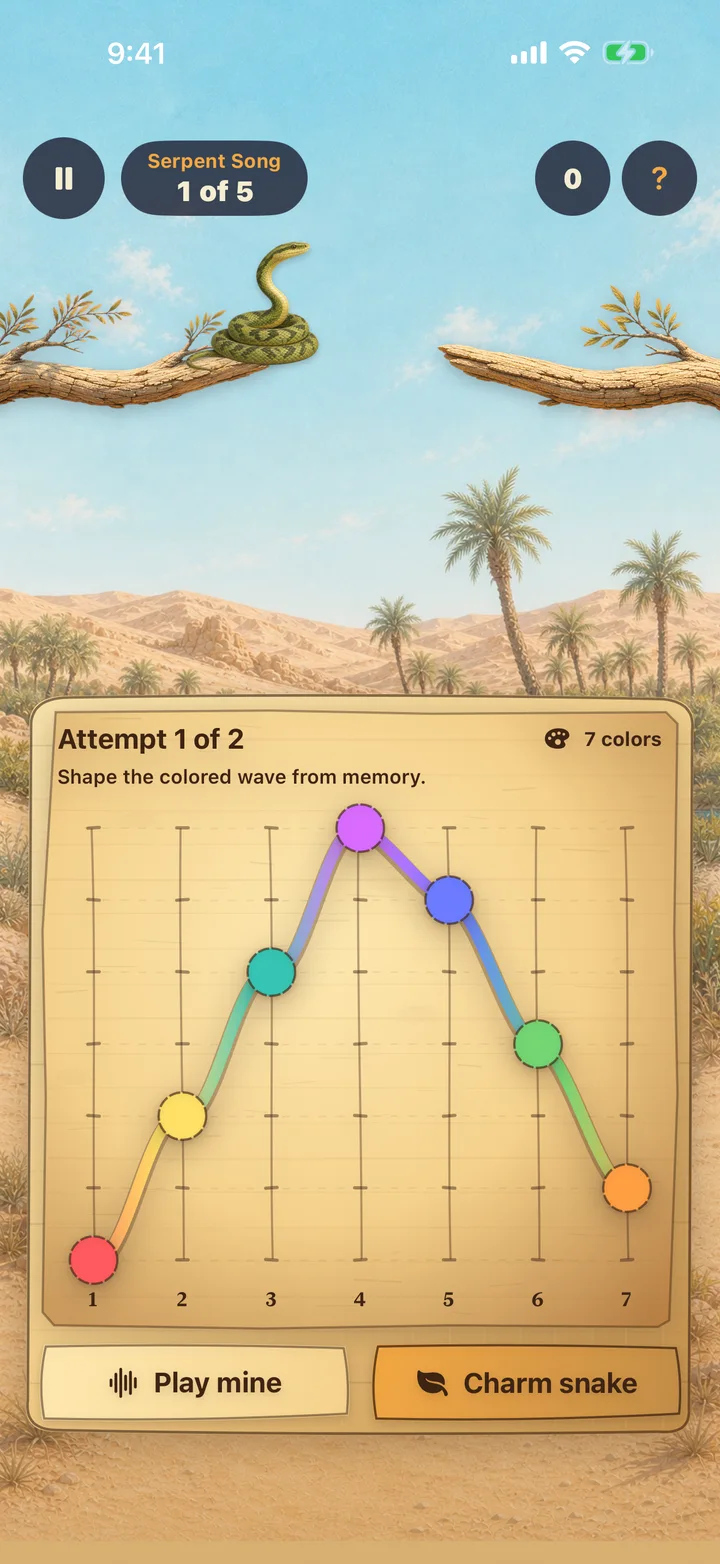
Three things to notice while listening
- The beginning: pay attention to the first note instead of waiting until the sequence has finished to start remembering.
- The shape: notice whether the sound rises, falls or returns to a similar place. This is a way to organise your attention, not a substitute for choosing the correct notes.
- The order: keep track of what followed what. Remembering the sounds but swapping their positions changes the melody.
Try one of these ideas at a time. After a round, decide whether the difficult part was hearing a note difference or holding the sequence in mind. That gives you a more specific reason to try again than simply wanting a higher score.
Melody memory is different from rhythm matching
A rhythm task asks you to notice the timing pattern. Echo Biomes’ Hidden Chirps uses a cricket rhythm and asks you to find its matching echo. Serpent Song centres on the identity and order of notes in a flute melody. Choose the serpent when you want a tune to remember; choose the cricket grove when the timing pattern is what interests you.
Loudness is another separate property. Peacock Garden asks which of two calls is louder. Keeping those tasks separate helps explain why a collection of listening games can feel varied even when every round begins with sound.
When you want a more musical exercise routine
Melodic memory also appears in ToneGym’s games catalogue. If you want that activity alongside interval, chord and notation work, explore our ToneGym comparison. Choose Echo Biomes when the nature world and its mix of listening tasks are the main attraction.
This distinction matters if you are studying music for a particular purpose. Completing a melody game does not by itself establish progress in sight reading, playing by ear or general memory. Select an exercise around the activity you want to practise.
A simple shared-play idea
Take turns with the same phone and let each player finish a round before discussing the tune. One person may remember a rising shape; another may focus on the first note. Compare those observations without calling out an answer while someone is playing.
Use a comfortable speaker volume and a place where the flute is clear. Echo Biomes requires iOS 17 or later. Its bundled games and sounds work offline after access is confirmed; starting the trial, purchasing or restoring access needs Apple’s services. The support page explains setup and access.
Try Echo Biomes. See the game and its screenshots, or open its App Store page.
Deliberately start one free 14-day trial. A separate lifetime unlock includes Family Sharing and future app updates. No subscription.